Saturday, February 6, 2010

Goat Musings


Part 1


My son left home one night because I insisted he had to milk the goats the next day, just a chore he had to accept with the rest of us, I told him, or he would have to live somewhere else. I actually said that.

He chose the second option, deciding to live with his friend who lived down the street and around the corner, which is where I thought he might go but didn’t know for sure.

That was a long night for me. I didn’t sleep, just sat up in the living room and worried about him and our relationship and about what the parents of his friend would think (yes, I'm ashamed to say I worried about that) and about the possibility that he could just head south to Salt Lake, although I didn’t know how he would get there. He finally came home at midnight, having changed his mind about living somewhere else.

It was probably a long night for him and a hard one. I can't know for sure, though, because he was never the one to talk about things much, especially when the things involved his feelings.

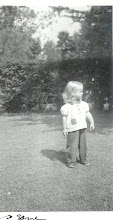
It wasn’t the first time—for the milking. The goats weren’t new. But it was the first time my brown-haired boy got up his guts and called his mother’s bluff. This happened in 1980 when he was 15, had not yet achieved his full stature, and was still a "little brother," sort of living under the shadow of his older brother, who milked the goats, too. We all milked the goats, except our youngest, and she wasn’t a year old yet. Why he picked that night, that moment to rebel I don’t know, but clearly he thought he’d had enough.

I have said we all milked the goats, and I would like to say that all the older children took their turns and the milking chore was spread evenly among them, but I don’t think it’s true. They took turns, but sometimes the older brother didn’t get home from school in time for the evening milking, and he was harder to roust out of bed in the early morning.

It’s possible that this 15-year-old of mine milked more than anyone except his dad and me, and I had fallen and broken my wrist and pelvis a couple of months before this incident, so my milking activities had stopped. I guess he picked up the slack.

Maybe he thought if he quit, we’d get his big brother to do more. Resentment can build up in a person, you know. Or maybe he thought we’d get rid of the goats. He had recently begun saying he didn’t like the milk.

Thursday, February 4, 2010

Don't Fall Into the Pierre Salinger Hole

I typed my brother's name into the google address line, and it took me immediately to a biographical article at Wikipedia. Interesting. First line is wrong. They say he is Allen Wilford Brimley. Allen he was never. I wonder if someone guessed at what the A stands for.

I have tried to contact them, once last night, once today. You know, it says down at the bottom Contact Us. Last night I sent an email with a correction. Silly me.

Blah, blah and many minutes later, I have decided to give it up. But in this process I learned what I already suspected. No editing. I didn't just figure this; they say it.

I think you know what that means.

http://www.cnn.com/2006/US/07/12/twa.conspiracy/index.html

Tuesday, February 2, 2010

Another

funeral.
Today I go to Chad Anderson's. He was our friend for a long time, too. Since we came to Boise. We loved him.

He and Wayne were part of a quartet for a few years. They would come to our house to practice, and that's how I got to know Chad. He loved to sing. He also loved to follow BYU sports. For years he'd come over to bring a copy of a little weekly sports newsletter, Cougar Tales, to Wayne.

Chad had an affliction whose name I don't remember, but it grew ever more debilitating for him. He could not stand. It ended his singing. Once I convinced him that he could sing in the choir. We'd put a stool up there for him so that when the choir stood to sing, he could sit on the stool and would be almost as tall as everyone else. He did that once that I remember.

Chad would ride his bike over here with the Cougar Tales, lean the bike against the house, and then he would lean against the house for support while we chatted and he gave me the newsletter. After a few years he couldn't ride the bike anymore, so he came in an electric cart, like a golf cart. The problem was not balance; it was in his legs. Eventually, he had to be in a wheel chair and could not go anywhere on his own.

After Betty Lou died, he was lost for a while. Then he began to fail and had to give up his home. He spent some time at Wynwood in assisted living, then moved up to Lewiston to live with his daughter. We missed him then. He died there last Friday. We'll really miss him now.

Saturday, January 30, 2010

My Neighbor

Today I go to the funeral of my former neighbor, June Hessing. She died a week ago today in Salt Lake, where she was living for a while with her daughter. June was 91.

June and Jim. I loved them both, especially Jim. He died about five years ago. They owned the land our house sits on, all the land in here. They were prosperous because of Jim, his Chrysler dealership and other endeavors.

June loved Jim, her family, the church, and music. She was about as big as a minute, energetic and, okay, I'll say it, quite officious. Just her way. She had a knee replaced some time before they moved from that big house, or, I must say, were moved out of it by their sons. Jim was NOT happy about that. She struggled with the new knee (her son Jeff, an orthopedic surgeon, did the surgery) until she finally brought it into subjection to her will.

I used to visit Jim and June in the little assisted living apartment they occupied until Jim's death, encouraged, I think, by that place and what his boys had done to him. Their house, next door to mine, is big. They had so much space and a good piece of land and a wonderful view out their big back windows. This little place they were moved to had one small window, one room, in fact, and it was a big come-down for the Hessings. "They didn't even pack a suit for me," he told one time. I was shocked by that, since he was always a church-going man.

The boys cleared the house out, got rid of their parents' stuff, and sold the place. Yes, the people who bought it are good neighbors to me, and I like them. But they aren't Jim and June.

I am trying to write about June. Not quite working out that way. But I will go to her funeral today.

Wednesday, January 27, 2010

Morning At the Mall, Part 4


But back to the sub-culture idea.


Sub-cultures have practices that outsiders don’t know about, because they’re outsiders. I felt like an outsider that morning, not because I don’t know how to walk, but perhaps because I was alone and most of the other walkers were not, and I didn’t walk as fast. I also felt like everyone there knows this mall, the little crannies and side areas to add distance, and I don’t. They know exactly how far down a side corridor to go before making the turn, and they know where all the restrooms are, and I found out there are more of those than you might think.


Besides, I did not look like them (that is my strong belief). I was not about to tie my sweatshirt around my waist, and I don’t like carrying things, like a water bottle, for instance. Certainly I would not have felt comfortable joining any group at a table, even if I had wanted a mall breakfast. And I don’t drink coffee.


So, yes, outsider. I’m okay with that.


Sub-cultures also have their own languages, their own jargon, which can exclude and sometimes alienate outsiders. I can’t report on that with entire certainty, because I heard nothing of the private conversations of these mall walkers.


However, I think I know what they talk about. Walking, their new walking shoes, their legs, feet, backs, massage therapy, their weight, their health, their last doctor appointment, life outside the mall, why they missed a day walking last week, who has dropped out, and, maybe, who has died. Probably they count laps, not necessarily out loud, and some of them may keep track of their lap times. I’m guessing, of course.


If these subjects and the language used to discuss them do not seem exclusive, I still say this is a sub-culture. And I’m thinking, “It's a group I have never claimed membership in, never wanted membership in. Yet here I am, walking the mall. But not tomorrow. No sir. Tomorrow I’ll be walking outside.”


And I did.

Tuesday, January 26, 2010

Morning At the Mall, Part 3

When I got back to my starting point on the upper level, I went downstairs, thinking I might find fewer people, because the food places are mostly upstairs, and wondering if there would be an age difference, like younger people downstairs. Yes, to both. So the sub-culture was also divided by floors.


What greeted me immediately was a sizeable group of young women, all with strollers, gathered in front of the permanently closed door of Mervyn’s, now defunct. I counted. Ten of them, and they had a leader. She was saying, “This time I want passionate walking. Passionate. Right? And when we get back to Sears we’ll do our abs.” Off they went.


I said, “Do you have a name?”

The leader said, “Stroller Stride.”

I may have said another “Cool.” I hope not. I know I did say, “Ten of you.”

“Well,” she said, “the number varies depending on who’s sick or whose kids are sick. Like mine,” and she showed me her empty double stroller.

“But you’re here,” I said. What I meant was, “How come you’re here if your kids are sick?” But she thought I was commending her, so she answered, quite proud of herself, “Yes, I’m here,” and she hurried off to catch up with the group.


I knew why she was here. She’s the leader. Vital to the cause of passionate walking.


At Sears they were on floor mats, doing their abs, except for their leader, who was standing above them counting and calling out instructions. And they had picked up a man. Full red beard and lots of red hair on his head. He was on a mat, doing his abs. I think he had a stroller, but I’m not sure.


At 10 o’clock I had made my two rounds and so went out to my car, got the shoes, did the return, and determined I’d wait a few minutes then walk the upstairs again. Which I did.


Now the mall was open, all the stores, and I could see shoppers among the walkers. You can tell a walker from a shopper. It’s easy. No purse, and generally the walker makes no stops at the stores, although earlier I did see a walker here or there look in and wave at the workers preparing to open up. These walkers are "regulars."


I did stop at stores, twice. Once at Macy’s upper level to look at sleepwear for my pregnant daughter and once in Sears, also on the upper level, to look at their TVs. Brief stops. No purchases.


When I exited Sears, here came a guy, mid-forties or so, really moving. He had to tip and bank to make the turn without slowing down. His uniform was not complete, no sweatshirt, no water, only pants, t-shirt, walking shoes, but his face and his stride showed him to be an intense walker who did not want to be slowed down. So I stopped him. Sometimes I’m like that.


“Isn’t this hard on your knees?” I asked as he tried to cruise by me. This question I really did want an answer for.

“I’ve had my knees done,” he said, “so I’m okay for a while.” Wow. He looked young to have had his “knees done,” which I assume means he is no longer using the knees he was born with.


Near Macy’s I saw a mother and daughter. They were sweating, and, yes, they both had sweatshirts around their waists and carried water. I stopped them and asked the knee question.


“Oh no,” said the daughter. “This is good for you. I always feel good after I walk every morning.”

“What did she ask?” said the mother.

“She asked if this walking is hard on our knees.”

“Oh no,” said the mother. “It’s good. I asked my rheumatologist.”

“I know,” I said, “but asphalt gives. This surface doesn’t. And I’m just . . .”

“No, no. It’s too cold to walk outside. Besides, my rheumatologist says this is good. She says it won’t hurt the knees.”


Well okay, I say to myself, not convinced because of how my left knee is feeling. And I’m thinking, “Yes, I know walking is good for you. I’ve walked. I could tell you a thing or two about walking, I bet, like four marathons. (So, you had to bring that up, did you, Carol.) But let’s get your rheumatologist down here and let her make five or ten brisk laps a day for a month on this stuff. Then see what she says.”


I didn’t say any of that out loud, of course. I mean, I didn’t come to the mall to make a point about walking surfaces and their effect upon feet, knees, or hips. I didn’t come to have a debate even. I really came to return my shoes.


Monday, January 25, 2010

Morning At the Mall, Part 2

Upstairs, most of the mall walkers were what I’ll have to call elderly. Like me, though I hate to say it, and some even older than that. One woman walked with a cane, but she was walking. Some looked like they needed canes, bent with age. But most were moving right along, doing their brisk daily walk at the mall.


There were groups of women, some talking as they walked, some not. Here and there a single woman or man stepped along, but most of the walkers had companions.


There were couples, more than a few, most looked to be in their 70s or 80s. Some of them held hands, or maybe just held on to each other. Some walkers used their arms to propel themselves. Many people, mostly women, had the sweatshirt around the waist going for them. Many carried water.


Some had done their walking, I believe (maybe I should have checked their shoes), and were taking breakfast at the mall, because although the stores had not yet opened, many of the food places had.


People sat here and there on the benches with their coffee or at the Food Court tables near McDonald’s. Starbuck’s was full. Mrs. Powell’s has eight tables nearby. All occupied. This is before the mall opens, remember. Some people were reading the morning paper. Most were talking. Made me think of those old time cafes in small towns where folks would gather for breakfast. People need a sense of community, I thought as I walked past.


But most people in the mall were not eating. They were walking. And most were heading in the same direction. That is, they walked counter clockwise so that most of their turns would be left turns. Left turns are easier when you’re walking. Anyone who is part of this mall-walking culture would know that.


One pair of walkers caught my eye, mid-thirties, holding hands as they walked. He was a big guy and she was small, but he shortened his steps to match hers. Nice. I saw them upstairs, and I would see them again downstairs, still holding hands, still walking step for step together. Did my heart good.